Category: Personal

May Day: Looking at the passing of a friend, and a consideration of values

May Day: Looking at the passing of a friend, and a consideration of values

I’m writing this post a day later than I wanted to. I intended it for May 1, for reasons I’ll explain in the post, but most of the text that I needed to include was in an email. And, for the first time I can recall, my email server was subject to a DDoS attack and I lost all access to my emails until today. So consider this posted on May 1, even though it’s May 2.

May 1 is celebrated as May Day around the globe. In ancient tradition, festivities on the day marked the beginning of summer. In more recent times, it came to be International Workers’ Day, following the 1886 Haymarket Riots in Chicago, and subsequently a day for marshall demonstrations in Communist countries. Later that day evolved into Labor Day, as it’s celebrated in many countries worldwide today. But, unknown to most of the world, it held a special place in my own panoply of personal holidays which I came to have when I was in high school in the 1960s. In that personal holiday schedule, May 1 was known as John Gaffney Day, in honor of my close friend by that name, John Kevin Gaffney, whose birthday fell on the date.

John and I always had what could be termed a complex friendship. Friends, and yet competitors, a sardonic way of conversing, a skeptical kind of mutual respect. My first girlfriend lived in the same community as John, and he knew her growing up. And he made a point of stealing her away from me, just to do it, not out of any real interest in her. I tended to follow John about almost slavishly after school. One day, in the Port Authority Bus Terminal in midtown Manhattan, I suddenly realized how I’d just been following him around and I announced, “I’m revolting!” To which John replied, “Yes, I’ve know that for years.” When I had my empire, the Franconian Empire, in high school, John was my Prince of Passaic and, as I recall, Prince of Warren, the New Jersey counties where, respectively, he lived and went to Boy Scout camp. There was incessant internecine rivalry between members of my imperial court, and John played no small part in that.

Politically we aligned in our early days, and together we campaigned for Nelson Rockefeller for Governor of New York. At one point John and I shared a house in Wayne, New Jersey, in our 20s, and he ran for township council. A memorable night was when he returned from some political meeting to find my girlfriend at the time sitting out on our front lawn with her suitcase. John was livid, how he was being embarrassed. He later told me he didn’t remember the incident. I never forgot it.

For awhile John and I both worked for the New Jersey Division on Civil Rights, the job he introduced me to and helped me get, my first real job after college.

In 1978, in Providence, Rhode Island, a drunk driver ran a red light and struck the car John was riding in. He barely survived the accident and wound up paraplegic and in a wheel chair, in which he remained the rest of his life. I often pushed that wheel chair, including up and down steps and up and down over curbs. It inspired me to try to design a wheel chair that can climb stairs. I think today there are such things.

John was my best man at my first wedding, in Quebec City, and we remained in contact through the subsequent years as he moved around the country and I moved around the country and then the world. Perhaps it was the zeitgeist of the 2000s, but our political views began to diverge, which by itself was no surprise. What was a surprise, what came as a shock more than a surprise, was when John announced one day in 2014 that our values had diverged. He disagreed, vehemently, with a position I had taken on some nominee before the Senate and he wrote me, in an email, “Most of all, though, I am saddened to see how far different our values have become. Or did I always misunderstand?”

I never felt our values had become different, even if our views on some things had. On March 12 of that year I wrote him in an email an exposition of how I did not see my values changing, at all, and I expected him to at least engage on that and respond. He never responded to my exposition, nor to a subsequent message, a birthday greeting on May 1, 2014, and it became clear that in his political zeal, in his very illiberal defense of his alleged liberalism, he had thrown 51 years of friendship on the dust heap of the same political division that was transforming and, in truth, destroying the country. I never heard from him again. And then yesterday I did a search, just on a hunch, and found he had died, of heart failure, on Easter Day 2020. In the finality of death, so much for that friendship, and so much for any denouement in resolving our alleged divergence of values or views or whatever.

I still feel it is important to state how, even if our views changed, our values had not. So here is my restatement of values as I sent them to John in March of 2014:

So you are sad to see how far different our values have become and you wonder whether you always misunderstood? I don’t know that our values differ all that much, even if our views do. But let’s take a brief inventory of my values and views “then” and “now”:

I was an advocate of the rights of the individual and openly challenged repression of those rights. Still am, still do.

I questioned authority and believed the government that governs least governs best. Still do.

I opposed violence, even in furtherance of one’s just causes: Still do.

I believed in fairness and equality of opportunity for everyone. Still do.

I have long detested “liberals” and their self-serving, half-hearted, hypocritical pretenses. Still do.

Even when I was religious, which I decidedly am not now, I detested hypocrisy, especially among self-proclaimed religious people. Still do.

I had respect for our Constitution and Bill of Rights then. Still do, perhaps more than ever.

I’ve always believed in a free, unfettered, and most of all independent press. Still do, and see its near-disappearance as the single biggest and most intractable threat facing our country.

I learned and adopted, then, Alfred North Whitehead’s precept that what a society needs is continual revolt, not revolution. And that is still what I believe.

I’ve always cut my own course and refused conformity to any one model or image. Still do, to the extent that I reasonably (and occasionally unreasonably) can.

Now I do think change is a hallmark of a living, sentient being, and so some things have changed, perhaps less in my value system than in my views.

For instance, I remember a time when I wrote “Bomb Hanoi Now!” on the envelope of every letter I sent, influenced by a certain John Kevin Gaffney, who urged me to put that on envelopes, as did he. I don’t think I would do that now, as I stopped doing it not too much after when I did it then.

I also remember campaigning for Republican candidates like Nelson Rockefeller, coincidentally influenced by a certain John Kevin Gaffney. I was a big supporter of John Kennedy, too (even though JFK would be considered a conservative today), and still am. I was led to believe that Barry Goldwater, on the other hand, was going to bring on the end of the world, and I have since come to see through that — to use a word in vogue — slander.

I’ve leaned Democratic and Republican at various times, but always considered myself an Independent, and I have never registered with any party in any state. I voted for, and against, when they did not live up to their promises, both Richard Nixon and Jimmy Carter. I voted for Bill Clinton, and would again. I voted for both Al Gore and John Kerry, and have since come to deeply regret both those votes, not that I am any fan of George W. Bush. I voted for Bob Barr simply because I could not in good conscience bring myself to vote for either Barack Obama or John McCain. Today, I mostly feel a pox on both major parties’ houses would be in order (though at this stage, more on the Democrats’ house than the Republicans’). If I identify with any political belief system, it would be libertarian (with a small “l”). And this perhaps best sums up the reality of my beliefs and values, if not always my views, all along.

I did go through a Socialist stage, it’s true. It took me awhile, but I eventually came to learn something about economics and human nature and thus to see how that economic and political system doesn’t work, though some elements of it can serve some societal purposes. I have come to often say, “I’ve been rich and I’ve been poor, and I can tell you rich is better,”  an expression I think I first heard from one — ready for this? — John Kevin Gaffney.

Do we see a pattern developing here?

By the way, if you want a cause to get behind and a petition to sign, here is one that I think embodies real injustice:

http://www.change.org/petitions/my-brother-was-sentenced-to-life-without-parole-for-a-nonviolent-drug-offense

Anyway, you’ll believe what you want, as will I, and if you choose to be sad, that’s your choice, though it’s on your account, not mine. Maybe that little inventory will at least help clarify things for you.

Your independent friend,

Frank

Featured photo, John Kevin Gaffney, photographer unknown; from Options Magazine, used under Fair Use.

This piece also appears on my Substack, Issues That Matter. Subscribe here and there, share the piece, and please comment.


One Year Later We Must Not Forget: Disgrace

One Year Later We Must Not Forget: Disgrace

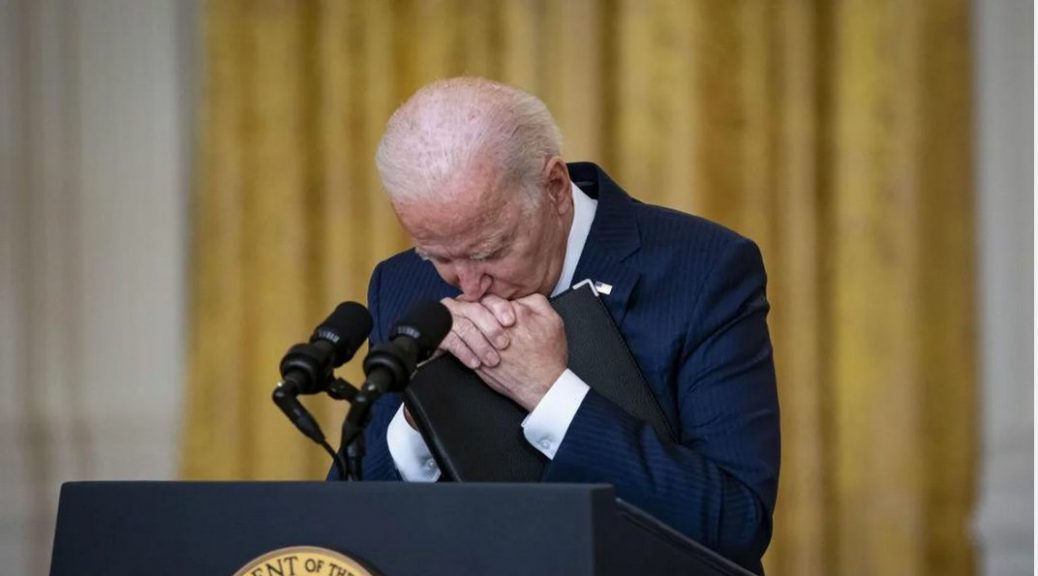
This piece initially appeared a year ago following the biggest surrender and debacle in U.S. history, all overseen by Joe Biden. It is important we don’t forget this event which long will live in infamy, both for the damage it did to the reputation, prestige, and credibility of this country and to its security and that of other countries. We also need to remember the needless deaths of 13 U.S. service members and hundreds of Afghans due to the incompetence of this administration. That number has now been eclipsed by the deaths of many other innocent Afghans and those who assisted U.S. and allied efforts over 20 years, unconscionably abandoned by Biden, and still more deaths in Ukraine resulting from the Russian invasion which was encouraged by the U.S. failure in Afghanistan and the abject weakness of this administration.

In a normal country in normal times, those responsible for such an enormous debacle as what those at the top in our country caused to happen in Afghanistan in recent weeks would resign in disgrace. And if they didn’t, steps would be taken by those charged with oversight to remove them from office, even try and punish them. But this is not a normal country and these are not normal times, and there seems to no longer exist any sense of shame, disgrace, or even admission of failure. Instead, as the alleged president just did, again, they take a victory lap and spew lies and distortions touting how brilliant and insightful they are, and hope everyone is as imbecilic and full of guile as they are.

Listening to Biden’s words a short while ago made me more angry than I can ever remember any political figure, in my entire life, make me. And that is saying something. I shouted out my anger, and I struck my head wondering how a single human being — as despicable and useless as this rotten excuse for a human being is — can be so profoundly stupid. And arrogant. Surely it has to be a team effort. And the ulterior motive a powerful one.

The insult I used as the title of my last piece on this subject — Ignorance With Impudence — barely touches the level of ignorance nor that of impudence put on full display today.

You see those hands in that photo above, showing a collapsing Biden last Thursday when he was challenged by Fox News’s Peter Doocy on his attempt to blame his Afghanistan catastrophe on his predecessor? Look carefully and you’ll see that they’re drenched in blood. The blood of 13 of our service people killed at Hamid Karzai International Airport last week. The blood of hundreds of needlessly dead Afghans in the same attack. The blood of the Americans, the blood of the Afghans who risked their lives to support us, deliberately left behind while surrounded by rabid terrorists intent on rooting them out and killing them. Also there is the blood of the hundreds, thousands, who will die in Afghanistan, in the United States, and elsewhere in the world as a result of the incredibly bone-headed and callous decisions made by this incompetent and those who allowed and facilitated him to make and carry them out.

If ever there was a time to say there is plenty of blame to go around, this is it. But since Biden is at the top of this heap of excrement and claims the buck stops with him — as if he actually means it, as Harry Truman did — he bears ultimate blame and responsibility for what happened, what will happen. To paraphrase the immortal 1988 words of Senator Lloyd Bentsen, back when Democrats still had some honor and a tad of sense, to vice presidential candidate Dan Quayle, Mr. President, I served with Harry Truman. I knew Harry Truman. Harry Truman was a friend of mine. Mr. President, you’re no Harry Truman.

Stalemate

Once more I find my post taking a different direction than I initially intended. The news continues to come in so fast, and it’s so awful, it’s impossible to keep up with it. I’m not a news service and this is not intended to be either daily reporting or a book. Any one with a fair mind and open eyes can see the reality, the actual events and people creating them, the results of those events and those people, and they don’t need me to continually point them out. My job, as I’ve executed it for more than four years now, is to put the pieces together, to analyze them, and to do what I can to bring people a clear view of the reality. To the extent many of my readers already have a clear view, they read my pieces and nod their heads and occasionally let me know they agree. And I try to give clear views to those readers who don’t see, or don’t want to see, the reality, and I hope I can bring some around to at least consider views other than those they are fed by what I’ve come to call the State Media, the corrupt and biased mainstream media and Big Tech whose lies and coverups in large part brought us to the terrible place we’re now at.

Initially I was going to call this piece Stalemate — the point in a chess match where a player has no legal moves left that won’t land his king in checkmate. It’s a draw, and the game is over. As a nation, we’re now in stalemate, and there are no legal moves left that will get us out of it. As a nation, we’re forced to live in this stasis, which was engineered by the Dem strategists and whoever is calling the shots behind the scenes of the party, and one has to hand them kudos for that achievement, as despicable and dangerous as it is. We have a clearly mentally incompetent president who, by almost any measure, the 25th Amendment was written for. But then, even if he could be removed from office either through that amendment or impeachment, we have a poison pill, the repulsive and dangerous Kamala Harris, as vice president. We get rid of the top guy, and we’re left with what might be an even worse substitute. And below her is the power hungry and vicious Nancy Pelosi. So, three layers deep, we’re left with no good legal moves, and that was the plan all along.

Those same Dem power brokers counted on what they see as the stupidity of the American people, for whom they have no respect other than to use them for their own purposes, and then along came the gift that keeps on giving — the COVID pandemic — which allowed them to flaunt and just plain throw out constitutional protections of our vote. That fraud allowed them to engineer a victory for a doddering old fool you wouldn’t trust to drive your kid’s school bus, let alone head the most powerful country on earth. And they knew that, even in his dementia, given the chance to grab the top accolade of his long and feckless political career — the presidency — Jello-O Joe would put the interest of the country aside and go for it. For this he won my top Profile in Cowardice award.

As I point out in that piece, it wasn’t always this way in American politics, even among the Democratic Party. Read the piece and see, if you forgot or weren’t around at that time, how Thomas Eagleton — a far more capable figure then Joe Biden — stepped down from being George McGovern’s running mate in 1972 when details of some issues with depression Eagleton had dealt with came out. At that time, the good of the country took precedence. That now seems like a prosaic concept.

An Unmitigated Disaster of a Presidency

For anyone who voted for Joe Biden — and, to be perfectly frank, you have to bear some responsibility for this debacle — I defy you to name one single thing Biden has done, one decision he’s made, that has made life better for ordinary Americans. I’ll go one further, and defy you to name one single thing, one single decision, he’s made, that hasn’t made things much worse for this country and its residents. We are so far beyond fucked at this point, it’s hard to even find a suitable word to describe it.

Whether it is throwing open our southwestern border to every ilk of criminal, drug runner, COVID-carrier, and terrorist who cares to cross it, in thorough disregard for our laws and well being — now being augmented by thousands of unvetted Afghans arriving and being sent willy-nilly around the country — taking our focus from competence and merit to attempting to inculcate divisions and distrust in our military, in our corporations and other institutions, and in society at large, to flaunting the Supreme Court and the rule of law to undermine the ability of property owners to pay their bills and stay afloat, to creating what can only be described as confusion on the coronavirus front, this president and his puppet masters have done what they can to sew discord and disorder in the nation. Crime is allowed to spiral out of control, unbridled federal spending is driving inflation, and he took us from energy independence to once more being dependent on the Middle East for our energy.

On the international stage, he has now shown this country to be weak and untrustworthy, and as we’ve learned, weakness breeds instability and tempts bad actors to take chances they would not otherwise. Despite the lies Biden told today — and there is no other word to describe his ridiculous and readily disprovable assertions — we have now created a terrorist nation in Afghanistan, and given a safe haven to not just the Taliban, but their close allies, al Qaeda, the Haqqani Network, and ISIS, among others. Even more mind-boggling, by leaving behind $83 billion in military hardware, we’ve made this terrorist state the fifth best equipped military in the world. The Taliban now have more Black Hawk helicopters, as just one example, than Australia.

Make no mistake. The same bunch of misguided idiots — Biden, Secretary of State Antony Blinken, Defense Secretary Lloyd Austin, child-moron Jake Sullivan who purports to be National Security Adviser, throw in Joint Chiefs Chairman and blowhard Mark Milley, and other members of the Obama foreign policy (sic) team — that brought us the ISIS caliphate in Syria and Iraq and the Iranian nuclear deal have now undone 20 years of progress, as difficult as it was, in Afghanistan, and created a mess and a threat that will be our nemesis for decades to come.

Perhaps most poignantly telling are the comments of the parents and spouses and siblings of the 13 slain service people, who spoke of Biden’s insensitivity, his self-absorption, his incessant talking about the death of his son Beau — who did not die in combat — his checking his watch each time, 13 times, a coffin came off the aircraft at Dover Air Force Base. I’ll end this piece with the words of Kathy McCollum, the mother of 20-year-old Marine Rylee James McCollum, killed in the attack on HKIA, who says it better than I ever could.

Calling in to a talk show Friday, McCollum said this:

“My son was one of the Marines who died yesterday. Twenty years and six months old — getting ready to come home from freaking Jordan to be with his wife and witness the birth of his son. And that feckless, dementia-ridden piece of crap just sent my son to die. I woke up at four o’clock this morning, two Marines at my door telling me my son was dead. So, to [have White House Press Babbler Jen Psaki on] right before me and listen to that piece of crap talk about diplomatic crap with frickin’ Taliban terrorists who just freakin’ blew up my son and no, nothing, to not say anything about, oh my god, I’m so sorry for families. So, my son is gone.”

McCollum’s son is gone. And as tragically, so is our national honor, and very possibly our security and our future with it.

Featured image, Biden’s Collapse, Al Drago, Bloomberg News via Getty Images. Used under Fair Use.

Stalemate, from rutrackerpulse.weebly.com. Used under Fair Use.

The Three Heads of the Poisonous Serpent, Jim Watson, Getty Images. Used under Fair Use.

This piece also appears in my Substack community, Issues That Matter. Please comment and share the piece and subscribe here, and there.

That Time of Year Again: Thoughts on “the Longest Day in the World”

That Time of Year Again: Thoughts on “the Longest Day in the World”

This piece initially appeared five years ago, on June 21, 2017, the Summer Solstice in the Northern Hemisphere. I originally posted this piece on this blog, and it became an annual event to post it each year on June 21. Two years ago I began posting it on my fiction blog, Stoned Cherry. This year it will appear on both blogs and on my Substack, Issues That Matter. Today, June 21, 2022, it is once more the Summer Solstice, and the actual solstice officially occurs at 5:14 a.m. EDT/09:14 a.m. UTC. The time and other references and weather comments in the piece are as they were five years ago, when the post first appeared. I’m no longer living on the boat, and there have been other changes. This year it has been 53 years, more than half a century, since my father’s death, and Sunday was Father’s Day here in the U.S. I hope you enjoy the piece. And play the music at the end.

It’s June 21, the day of the summer solstice in the Northern Hemisphere, the winter solstice in the Southern Hemisphere. It’s a day that holds various meanings for different peoples, and its significance goes back millennia. The solstice, whether summer or winter, officially took place at 12:24 a.m. U.S. Eastern Daylight Time this morning, or 04:24 UTC.

Just to set the record straight and dispel any questions about my scientific knowledge, I know it’s not the longest day in the world. It’s the longest day of the year in the Northern Hemisphere, the shortest day in the Southern Hemisphere. But we’ll get to this a bit later.

It’s been a mixed bag today here on the West Coast of Florida. We’ve been having a lot of rain, something we didn’t have much of over the winter, and the rainy times are interspersed with sunny breaks. Right now, as I look out the window of my boat, the sun is mostly out but I’m looking at the light through rain-drop spattered glass. At least we’re not getting the effects of Tropical Storm Cindy, which is much further west and at this moment dumping lots of water on the upper Gulf Coast.

In this country, the summer solstice marks the official beginning of summer, though in other places and other cultures it marks the middle of summer, as indicated by the name Midsummer Night, which can occur anywhere from the 20th to the 24th of June. And really it is midsummer, since the days, which have been lengthening since the equinox three months ago, now will start to grow shorter, the nights longer.

The sun has reached its apogee in this hemisphere, as it stands today directly over the Tropic of Cancer. I feel summer ending, we already are on the downhill side, the side that will take us through the hot coming months but already on the slide back into winter, the cold time of year. Just as in the Southern Hemisphere the days will begin to grow longer as the seasons move back to summer.

A year ago on this day I was in Alaska, where there never really was a night. Where I was, well below the Arctic Circle, the sun went down sometime around midnight, but there was a kind of twilight that lasted until the sun rose again a few hours later. Above the Arctic Circle on this day, the sun never sets, and it truly is the Land of the Midnight Sun.

My thoughts turn to other things on this day. Someone asked me the other day, which was Father’s Day in the U.S., what thoughts I had of my father on that Sunday. But really, I think of Father’s Day as a commercial holiday. I also remember the last Father’s Day I had with my father, and how my mother did her unwitting best to create conflict between me and my father. While I may wish a happy day to the fathers I know on Father’s Day, it is today, the day of the solstice, that I think of my father. June 21 was his birthday, which in most years coincides with the solstice. I was told as a child that it was the longest day of the year, which I translated in my own way into it being the longest day in the world, and I would go around telling everyone who would listen that it was.

“It’s the longest day in the world!” I’d exclaim each year on his birthday, from morning until night.

I think today of my father on this day, the 21st of June. Gone now, for nearly 48 years. And I think back to the day of his birth, June 21, 1913. One hundred and four years ago. Even had he not died young as he did, just 56 years old, it is hard to imagine that he would still be alive today had he not died when he did. A prolongation of the inevitable.

A factoid I learned earlier is that today is not the longest day in the history of the world, as one might imagine it to be given that the earth’s rotation on its axis generally was slowing. Rather, the longest day in the history of the world is believed to be June 21, 1912, and things like the earth’s tides and recession of the glaciers have caused a slight increase in the rate of the planet’s rotation since then. My father was born a year later, which arguably could have been the second or third longest day in the history of the world, if not the actual longest day in the world.

I wonder what it was like on that June day, the day of the solstice, the longest day of the year, the day my father was born, in Jersey City, New Jersey. Did his father and mother, his Italian parents, my grandparents that I never knew, know it was the solstice? Did they even know of the solstice? Regardless, I’m inclined to think they did not think of it, if for no other reason than that they had something else on their mind that day. And then I think of the things people from then knew and were taught and how many of those things have been lost today, in these encroaching new Dark Ages in which we find ourselves, and I have to wonder. Perhaps they knew, better than most people today know. Or care to know. And they did note the auspicious day on which their son was born.

I’ll think of my father again on July 27, the anniversary of his death, and by then even our summer, the summer as we define it, will be half over.

The solstices, like the equinoxes, serve as a kind of punctuation for me. I watch the ebb and the flow of the days, the seasons, the years, and they mark the passage of time, time that increasingly slips by way too quickly. All of life is punctuation, I think. Slowing. Stopping. Breaking things, even waves on the water, into different parts, different pieces, different rhythms and fugues and movements and phrases and sentences. It is through such punctuation that we mark our lives, mark our transit through summer and back into winter, from day into night, from life into death. Watching, as a reader of a story does, while the time of our lives flows past. When we lose that punctuation, everything blends into one big mass, and we feel lost in the current, flailing and drowning as we’re pulled inexorably along. At least I do.

Enjoy this song, which I found today amid my files, and with which I end this post, and enjoy the time that nature and life give us.


Click here if song doesn’t play.

A Time When the World Needs Elie Wiesel

A Time When the World Needs Elie Wiesel

Seeing the scenes of devastation, cruelty, and inhumanity — one might call it barbarity — coming out of Ukraine, and especially witnessing the hundreds of dead, tortured, and raped men, women, and children in the Kyiv suburb of Bucha, I was reminded of my encounter with Elie Wiesel, modern times’ foremost advocate for the oppressed, some twenty-three years ago. I met Wiesel when assigned as his control officer during his visit to Albania, sent by President Bill Clinton as his personal envoy to look into the state of the Kosovo refugees finding safe harbor in the country and in neighboring Macedonia.

In his report on the visit, WIesel, a Holocaust survivor, wrote, “What I saw and heard there was often unbearable to the survivor that still lives in my memory. In fact, I never thought that I would hear such tales of cruelty again.”

And yet, here we are, again. Twenty-three years later and just 700 miles (1,120 kms) distant, and once more we’re witnessing the imposition of unspeakable cruelty by one people upon another.

In the lingering heat at the end of a long Albanian June day, I vividly recall Wiesel expressing to me his biggest fear, that the hatred being engendered by the terror wreaked on the victims would only lead to a desire for revenge and, he feared, that revenge would carry over to future generations. Already now we’re hearing mention — perhaps remarkably restrained given the horrors these people have suffered and witnessed — of a new hatred for the Russians uttered by Ukrainian refugees and those who stayed behind amid the violence and destruction and killing. As Wiesel wondered in 1999, whether the world had learned anything, and concluding, “I am not so sure,” we can say today that the world, and its evil-doers, has learned pitifully little.

Wiesel died on July 2, 2016. His loss is inestimable. Indeed, the world would benefit if it could hear his voice today. This is a time when the world needs Elie Wiesel. And if it can’t hear his voice, it can look back at his words spoken during his life.

I wrote the piece below, and it appeared on the first anniversary of Elie Wiesel’s death, July 2, 2017. I think it worth republishing it now, and the horrors and the inhumanity Wiesel and I heard recounted in 1999, and his concerns for the future, apply equally, if on an even bigger scale, today.

Remembering Elie Wiesel

The news of Elie Wiesel’s death reached me on the car radio last July 2 as I was driving through Banff and Jasper national parks in Alberta. The sun had come out after a very rainy Canada Day the previous day, but the news of Wiesel’s passing arrived as a shock that darkened even that bright Saturday. I had a most personal and moving encounter with the Holocaust survivor, Nobel laureate, author, teacher, and renowned advocate for the oppressed 17 years prior, and I knew I needed to write something of my memories of him. Unfortunately, circumstances were not conducive that day or in subsequent days as I made my way back to the U.S. and to Florida, and the months that followed proved far more tumultuous and challenging than I had imagined. But now, on the anniversary of his death, I feel it’s finally time I share my thoughts on this man who touched my life so profoundly.

In June of 1999 I was again posted to the U.S. Embassy in Tirana, Albania, returning there on TDY at my request from my then-permanent station in Brasilia. I couldn’t bear to read any more accounts of what the Serbs were doing to the Kosovar Albanians during their onslaught on the province of Kosovo – perhaps in part due to my own partially Albanian ancestry – and I asked to be sent on temporary duty back to Tirana, where I arrived in mid-May and was to remain through most of July.

It was during the first week of June 1999 that Elie Wiesel was sent as a personal representative of President Bill Clinton to visit the refugee camps housing the displaced Kosovar Albanians in Macedonia and Albania. The President wanted to get a first-hand read on what was going on, and what the state of the refugees was, and so he turned to the man who had spent so much of his adult life speaking out for the oppressed of the world. The man who himself had survived internship, at the age of 15, at two of Nazi Germany’s most notorious death camps, Auschwitz and Buchenwald.

Perhaps because I constituted a significant part of the embassy’s collective memory, having been posted to Tirana from 1995 to 1997, including during Albania’s own internal descent into temporary madness following collapse of the country’s massive pyramid schemes, I was assigned as control officer to Mr. Wiesel. What that meant was that I was to accompany the visitor wherever he went, look after his safety and well being, oversee the translators, drivers, and other personnel assisting in the mission, serve as liaison to the embassy and whatever relevant agencies to assure that his requests were met, answer his questions about the country and the situation to supplement what knowledge he was garnering on his own, and to generally provide whatever support the President’s envoy might need or want. It struck me then as a great honor to be selected to fill this role, and it still strikes me that way.

Interestingly, in his report to the President, Mr. Wiesel said he was “accompanied by three able US government officials” during his visits to the two countries, and in acknowledging the role played by the embassies and the U.S. government agencies that assisted with the visit, he said, “They went out of their way to be helpful. They bring honor to our country.”

In truth, I felt that it was he who brought honor to us through his visit and, more than anything, the serious, sensitive, and intense manner in which he approached his role and the kindness he showed to everyone he came in contact with.

June brings heat to Albania, and the tents housing the thousands of refugees who had fled their homes in Kosovo were hot in the June sun. Elie Wiesel never faltered for a moment as we went from camp to camp, interviewing dozens of people in each camp, conducting the interviews in the tents, working through a translator, and listening intently to the unrelenting accounts of personal horror and loss that poured out. I sat in on most of these interviews, and hour by hour and day by day the strain and the sadness grew.

We got out into the areas where the camps had been set up, and this provided me with the occasion of my first-ever helicopter ride, aboard a U.S. Navy Sea Stallion that carried our entourage west out of the capital to our first stop. The schedule we kept up would have been grueling all by itself, but Wiesel was unstopping in his quest to speak with as many of the refugees as he could, seemingly disregarding any jet lag he might have picked up coming from New York, even at the age of 70 at the time.

We set up individual interviews as well as, as I recall, one or two group sessions, always in the big white refugee tents. For hours upon hours we heard women tell of watching their husbands and sons taken away and gunned down by the Serbs. We heard of parents separated from their children, of children watching their parents killed before theirs eyes, of the difficult and dangerous trek over the mountains and out of Kosovo to relative safety in Albania.

As Wiesel wrote in his report to President Clinton, “I listened to their tales of senseless cruelty and inhumanity which characterized Milosevic’s army and police; they have been reported in the international media. Still, it is different to hear it first-hand. One feels frustrated and powerless in their presence. And embarrassed. Pristina and Pec, Djakovica and Cecelija, Mitrovica and Glogovac, Kuraz and Izbica: eyewitnesses brought back harrowing detailed graphic reports from Kosovo’s killing fields. They go on and on. Forced expulsions, houses looted, villages burned, insults, threats, imprisonment, repeated rapes of young women, beatings of young men, separation of men and women, summary executions: everywhere, the process is the same. And the tormentors – who are they? Most of them are former neighbors.”

He heard again and again how it was former neighbors who were inflicting these cruelties, and I remember the interview Wiesel cites in his report: “ ‘A policeman came with his 5-year-old son,’ a man with an extraordinarily kind face told me. ‘He pointed at us and asked the boy to choose the prisoner to be beaten that morning.’ ”

When we took breaks, or when it was time to head back to Tirana at day’s end, we would watch the refugee children playing their games between the tents, as children will do.

“In this haunted world of Kosovo refugees, adults wept,” Wiesel writes in his report to the President. “Children did not. They sang. They played games. They laughed. And I no longer know what hurt us more: the children’s laughter or their parents’ tears.”

But what is not contained in those words is what we saw, again and again, which was children not just laughing and singing, but also pretending in their play to capture and execute one another, having picked up perhaps all too well what they had witnessed back home. I remember being at dinner in an open-air restaurant with embassy colleagues the evening of our camp visits and trying to describe what I had witnessed. But I was unable to get past the image of children forming guns with their fingers and using them to play-shoot their playmates in the back of the head, and breaking down at the table, not able to go on. The memory still haunts me and brings tears to my eyes even as I write these words.

It’s relevant to recall the details of Elie Wiesel’s life, being born into a town in Transylvania, a part of Romania that was transferred to Hungarian control for several years during World War II. And from there being hauled off with his family to the Nazi concentration camps as part of the Holocaust. Only Elie and two older sisters survived, their parents and younger sister killed in the camps, and the only reason Elie survived was by lying about his age, saying he was 18 and so able to work and prove useful to his captors. His life since then was marked with concern for the oppressed, and working to see that something like the Holocaust could never be repeated.

I think hearing the Kosovar refugees tell of the horrors that they were subjected to and witnessed brought back too many bad memories to Elie Wiesel. I could see it in his face, a look I can still see today, the effect all this was having on him. And in a low voice what he conveyed to me was his fear that this terror the refugees experienced was just going to carry on, was going to engender hatred and a desire for revenge, and the adults and the children playing their games were going to return to Kosovo with a desire to inflict on the Serbs what the Serbs had inflicted on them. It was this fear for the future that concerned him the most.

He writes in his report, “What I saw and heard there was often unbearable to the survivor that still lives in my memory. In fact, I never thought that I would hear such tales of cruelty again.”

His fear was that the victims would become the victimizers, seeking to wreak back onto the Serbs what their Serb neighbors had done to them. Toward the end of his report Wiesel expresses his concern for the future: “Their bitterness, indeed their hatred for [Serbian President Slobodan Milosevic] and his subordinates, will not fade away.”

When Wiesel was awarded the Nobel Peace Prize in 1986, the Norwegian Nobel Committee called him “a messenger to mankind.” But at the entrance to the U.S. Holocaust Museum in Washington, it is Wiesel’s words that are carved in stone: “For the dead and the living, we must bear witness.”

Other words spoken by Wiesel must give us pause for thought, though. Lamenting that his father had no grave at which he might grieve, he said, “What can I tell him? That the world has learned? I am not so sure.”

In June 1999 and afterward, Elie Wiesel bore witness to the suffering and cruelty brought down on the Kosovar Albanians, and I think it added to his uncertainty that the world had changed since the Holocaust. But for me, a lowly embassy control officer, I will never forget his presence or his concern. In those couple of days, my life was truly touched by him.

Read Elie Wiesel’s full report to President Clinton here.

Photo by Remy Steinegger, World Economic Forum. Used with permission.

This piece also appears on my Substack, Issues That Matter. Subscribe here, and there, and share the piece.

Disgrace

Disgrace

In a normal country in normal times, those responsible for such an enormous debacle as what those at the top in our country caused to happen in Afghanistan in recent weeks would resign in disgrace. And if they didn’t, steps would be taken by those charged with oversight to remove them from office, even try and punish them. But this is not a normal country and these are not normal times, and there seems to no longer exist any sense of shame, disgrace, or even admission of failure. Instead, as the alleged president just did, again, they take a victory lap and spew lies and distortions touting how brilliant and insightful they are, and hope everyone is as imbecilic and full of guile as they are.

Listening to Biden’s words a short while ago made me more angry than I can ever remember any political figure, in my entire life, make me. And that is saying something. I shouted out my anger, and I struck my head wondering how a single human being — as despicable and useless as this rotten excuse for a human being is — can be so profoundly stupid. And arrogant. Surely it has to be a team effort. And the ulterior motive a powerful one.

The insult I used as the title of my last piece on this subject — Ignorance With Impudence — barely touches the level of ignorance nor that of impudence put on full display today.

You see those hands in that photo above, showing a collapsing Biden last Thursday when he was challenged by Fox News’s Peter Doocy on his attempt to blame his Afghanistan catastrophe on his predecessor? Look carefully and you’ll see that they’re drenched in blood. The blood of 13 of our service people killed at Hamid Karzai International Airport last week. The blood of hundreds of needlessly dead Afghans in the same attack. The blood of the Americans, the blood of the Afghans who risked their lives to support us, deliberately left behind while surrounded by rabid terrorists intent on rooting them out and killing them. Also there is the blood of the hundreds, thousands, who will die in Afghanistan, in the United States, and elsewhere in the world as a result of the incredibly bone-headed and callous decisions made by this incompetent and those who allowed and facilitated him to make and carry them out.

If ever there was a time to say there is plenty of blame to go around, this is it. But since Biden is at the top of this heap of excrement and claims the buck stops with him — as if he actually means it, as Harry Truman did — he bears ultimate blame and responsibility for what happened, what will happen. To paraphrase the immortal 1988 words of Senator Lloyd Bentsen, back when Democrats still had some honor and a tad of sense, to vice presidential candidate Dan Quayle, Mr. President, I served with Harry Truman. I knew Harry Truman. Harry Truman was a friend of mine. Mr. President, you’re no Harry Truman.

Stalemate

Once more I find my post taking a different direction than I initially intended. The news continues to come in so fast, and it’s so awful, it’s impossible to keep up with it. I’m not a news service and this is not intended to be either daily reporting or a book. Any one with a fair mind and open eyes can see the reality, the actual events and people creating them, the results of those events and those people, and they don’t need me to continually point them out. My job, as I’ve executed it for more than four years now, is to put the pieces together, to analyze them, and to do what I can to bring people a clear view of the reality. To the extent many of my readers already have a clear view, they read my pieces and nod their heads and occasionally let me know they agree. And I try to give clear views to those readers who don’t see, or don’t want to see, the reality, and I hope I can bring some around to at least consider views other than those they are fed by what I’ve come to call the State Media, the corrupt and biased mainstream media and Big Tech whose lies and coverups in large part brought us to the terrible place we’re now at.

Initially I was going to call this piece Stalemate — the point in a chess match where a player has no legal moves left that won’t land his king in checkmate. It’s a draw, and the game is over. As a nation, we’re now in stalemate, and there are no legal moves left that will get us out of it. As a nation, we’re forced to live in this stasis, which was engineered by the Dem strategists and whoever is calling the shots behind the scenes of the party, and one has to hand them kudos for that achievement, as despicable and dangerous as it is. We have a clearly mentally incompetent president who, by almost any measure, the 25th Amendment was written for. But then, even if he could be removed from office either through that amendment or impeachment, we have a poison pill, the repulsive and dangerous Kamala Harris, as vice president. We get rid of the top guy, and we’re left with what might be an even worse substitute. And below her is the power hungry and vicious Nancy Pelosi. So, three layers deep, we’re left with no good legal moves, and that was the plan all along.

Those same Dem power brokers counted on what they see as the stupidity of the American people, for whom they have no respect other than to use them for their own purposes, and then along came the gift that keeps on giving — the COVID pandemic — which allowed them to flaunt and just plain throw out constitutional protections of our vote. That fraud allowed them to engineer a victory for a doddering old fool you wouldn’t trust to drive your kid’s school bus, let alone head the most powerful country on earth. And they knew that, even in his dementia, given the chance to grab the top accolade of his long and feckless political career — the presidency — Jello-O Joe would put the interest of the country aside and go for it. For this he won my top Profile in Cowardice award.

As I point out in that piece, it wasn’t always this way in American politics, even among the Democratic Party. Read the piece and see, if you forgot or weren’t around at that time, how Thomas Eagleton — a far more capable figure then Joe Biden — stepped down from being George McGovern’s running mate in 1972 when details of some issues with depression Eagleton had dealt with came out. At that time, the good of the country took precedence. That now seems like a prosaic concept.

An Unmitigated Disaster of a Presidency

For anyone who voted for Joe Biden — and, to be perfectly frank, you have to bear some responsibility for this debacle — I defy you to name one single thing Biden has done, one decision he’s made, that has made life better for ordinary Americans. I’ll go one further, and defy you to name one single thing, one single decision, he’s made, that hasn’t made things much worse for this country and its residents. We are so far beyond fucked at this point, it’s hard to even find a suitable word to describe it.

Whether it is throwing open our southwestern border to every ilk of criminal, drug runner, COVID-carrier, and terrorist who cares to cross it, in thorough disregard for our laws and well being — now being augmented by thousands of unvetted Afghans arriving and being sent willy-nilly around the country — taking our focus from competence and merit to attempting to inculcate divisions and distrust in our military, in our corporations and other institutions, and in society at large, to flaunting the Supreme Court and the rule of law to undermine the ability of property owners to pay their bills and stay afloat, to creating what can only be described as confusion on the coronavirus front, this president and his puppet masters have done what they can to sew discord and disorder in the nation. Crime is allowed to spiral out of control, unbridled federal spending is driving inflation, and he took us from energy independence to once more being dependent on the Middle East for our energy.

On the international stage, he has now shown this country to be weak and untrustworthy, and as we’ve learned, weakness breeds instability and tempts bad actors to take chances they would not otherwise. Despite the lies Biden told today — and there is no other word to describe his ridiculous and readily disprovable assertions — we have now created a terrorist nation in Afghanistan, and given a safe haven to not just the Taliban, but their close allies, al Qaeda, the Haqqani Network, and ISIS, among others. Even more mind-boggling, by leaving behind $83 billion in military hardware, we’ve made this terrorist state the fifth best equipped military in the world. The Taliban now have more Black Hawk helicopters, as just one example, than Australia.

Make no mistake. The same bunch of misguided idiots — Biden, Secretary of State Antony Blinken, Defense Secretary Lloyd Austin, child-moron Jake Sullivan who purports to be National Security Adviser, throw in Joint Chiefs Chairman and blowhard Mark Milley, and other members of the Obama foreign policy (sic) team — that brought us the ISIS caliphate in Syria and Iraq and the Iranian nuclear deal have now undone 20 years of progress, as difficult as it was, in Afghanistan, and created a mess and a threat that will be our nemesis for decades to come.

Perhaps most poignantly telling are the comments of the parents and spouses and siblings of the 13 slain service people, who spoke of Biden’s insensitivity, his self-absorption, his incessant talking about the death of his son Beau — who did not die in combat — his checking his watch each time, 13 times, a coffin came off the aircraft at Dover Air Force Base. I’ll end this piece with the words of Kathy McCollum, the mother of 20-year-old Marine Rylee James McCollum, killed in the attack on HKIA, who says it better than I ever could.

Calling in to a talk show Friday, McCollum said this:

“My son was one of the Marines who died yesterday. Twenty years and six months old — getting ready to come home from freaking Jordan to be with his wife and witness the birth of his son. And that feckless, dementia-ridden piece of crap just sent my son to die. I woke up at four o’clock this morning, two Marines at my door telling me my son was dead. So, to [have White House Press Babbler Jen Psaki on] right before me and listen to that piece of crap talk about diplomatic crap with frickin’ Taliban terrorists who just freakin’ blew up my son and no, nothing, to not say anything about, oh my god, I’m so sorry for families. So, my son is gone.”

McCollum’s son is gone. And as tragically, so is our national honor, and very possibly our security and our future with it.

Featured image, Biden’s Collapse, Al Drago, Bloomberg News via Getty Images. Used under Fair Use.

Stalemate, from rutrackerpulse.weebly.com. Used under Fair Use.

The Three Heads of the Poisonous Serpent, Jim Watson, Getty Images. Used under Fair Use.

This piece also appears in my Substack community, Issues That Matter. Please subscribe here, and there.